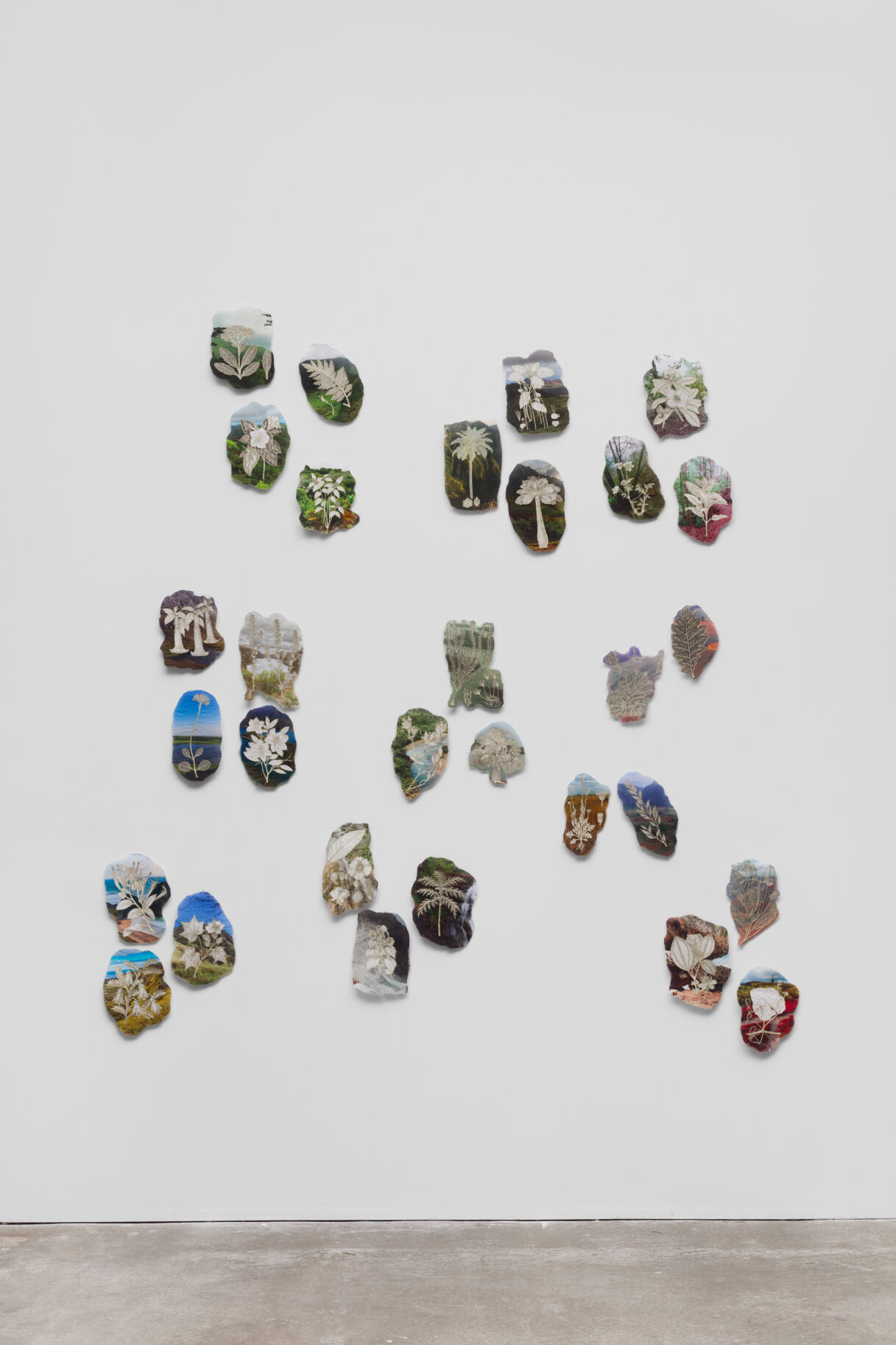
‘Herbarium Amaranto’ is based on IUCN Red Lists regarding plant spe-cies that are extinct or extinct in the wild. Some of these specimens may never have been depicted in botanical illustrations or photographed by botanists of the time; this makes it very difficult, in some cases, to re-construct their appearance. Through the BHL Library, it has been pos-sible to locate their descriptions in digitized historical books and pe-riodicals. Thanks to the digital archives of major botanical gardens, it is also possible to access dried specimens and use artificial intelligence to reconstruct a plausible botanical illustration based on visual and written evidence. These illustrations have been placed in the foreground of an image showing the landscape where the specimens were last sighted. It is believed that nearly all of the plants examined so far have disappeared as a result of the introduction of invasive vegetation or animals from other ecosystems. The construction of buildings and infrastructure has also contributed significantly to the extinction of many species, and cli-mate change has played an important role. In some cases, however, it was the overlap of names and classifications that created problems in identifying the taxon. The project involves the creation of 80 elements measuring a maximum of 20×30 cm, which can be assembled in various ways to create an eroded ‘fresco’ effect on the wall where they will be placed. The botanical design is printed and then embroidered on linen. This has enabled the threads to be manually removed from the background of the embroidery, while still allowing a glimpse of the fundamental characteristics of the landsca-pe depicted in the distance. The title evokes the Amaranth plant, both be-cause of its fragility and because it recalls the symbolic color of Mughal architecture, where the red flowers that adorned the mausoleums served both as a poignant and elegiac message and as a wish for the future.The choice of Indian Zhardosi embroidery stems from the fact that this tech-nique, too, is at risk of disappearing, as it is time-consuming and no longer compatible with today’s economy; yet its continued use remains a form of cultural resistance.